(Free Webinar) Resonance: A Sleeping Giant

Hydro is pleased to announce we will be collaborating with Pumps & Systems to host a webinar focusing on structural resonance. The free webinar will be held on Thursday, October 21, at 11 a.m. CDT.

Resonance is a condition that is often misdiagnosed and commonly goes undiagnosed, resulting in persistent high amplitude vibration issues for long periods. Resonant excitation occurs when a forcing function (generated by rotating equipment) coincides with a structural natural frequency. This problematic occurrence typically results in highly directional vibration and increased amplitudes that can be difficult to resolve without the proper engineering approach.

Resolving structural resonance problems can be quite expensive when trial and error methods are attempted in the field (such as trying to stiffen or detune a structure). This webinar will focus on ways to identify structural resonance and how to eliminate the high vibration amplitudes that commonly accompany it without the guesswork. Hydro Reliability Services’ Glen Powell, Reliability Engineer, and Kyle Bowlin, General Manager, will be presenting.


Interested in attending the webinar? Sign-up on Pumps & Systems
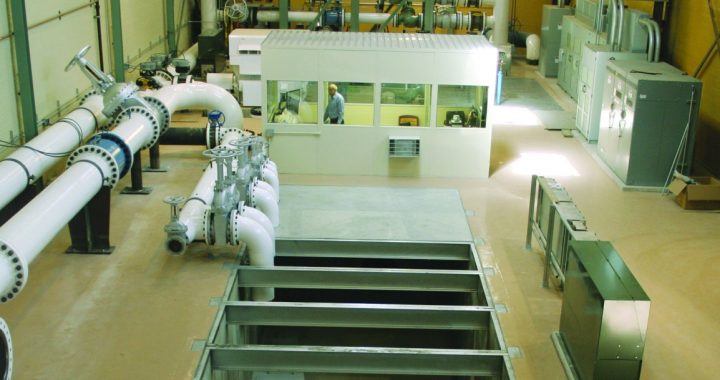
a large room

Hydro South Tests Nuclear Power Vertical Condensate Pump at Test Lab

Hydro South recently completed the overhaul of a Condensate pump at its facility outside of Atlanta, GA. This pump is a vertical can-type, motor-driven centrifugal condensate pump installed at a nuclear power facility in the Southeastern US. The condensate system has three identical pumps that operate in parallel (with a maximum of two pumps normally in service and an installed spare).

The pumps are designed to operate continuously for the normal 18-month fuel cycle with no maintenance attention. Because the condensate system is critical to plant operation, it is imperative to verify the performance of the pump before getting it back in service. Continue reading

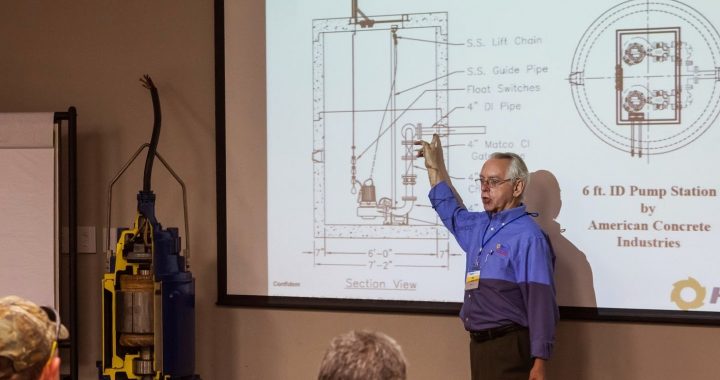
a group of people standing in front of a computer

A Hydro University Testimonial

Eduardo Orozco Gallegos (condition monitoring intern) on Hydro University’s offerings and use in company onboarding:

“As a current Mechanical Engineering undergraduate student, I can truly say that the courses I took from Hydro University were phenomenal! They combined components of my Vibration, Thermodynamics, and other ME courses and turned them into concise, but still thorough, classes. Quick but effective review quizzes after every course subsection ensured that the most important information and concepts were retained.”

Continue reading

Refurbishing a Contaminated Nuclear Casing

Creative approaches that extend beyond original designs, standard tools, and traditional engineering practices can provide significant savings and higher reliability of pumping equipment. For example, in one such situation, the casing of a charging pump at a European nuclear plant had been over-pressurized and needed to be refurbished. Not only was the pump service radioactive, but the casing was also found twisted with its internal components unable to properly fit into the casing, and the machined surfaces out of alignment.

The original equipment manufacturer (OEM) of the pump stated that they could not repair the casing and that the only option was to purchase a new one. The nuclear plant’s engineers approached Hydro, Inc., a global aftermarket pump service provider, for assistance in finding a spare casing.  When no spare was found, Hydro initiated a more detailed discussion with the plant about refurbishing the casing.

Hydro’s team inspected the pump, the casing, and the internal element and explored all possible options (Figure 1). Hydro was able to find an inventive solution by machining the casing in the contaminated state and developing creative methods to guarantee a proper fit-up when the casing repair was completed. Despite the OEM suggesting a new pump be purchased, the service provider was able to find an innovative and cost-saving way for the plant to repair the casing and reduce downtime. Continue reading

Analysis & Engineering Upgrades Solve Ring Section Pump Failure

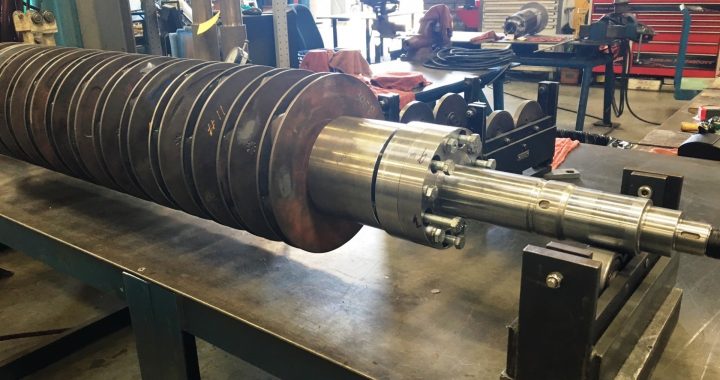
A major power plant in the United States experienced high vibration and recirculation issues with several ring section (BB4) boiler feed pumps, resulting in multiple catastrophic failures and unplanned outages. This case study details one of the pumps that was shipped to an aftermarket pump service center for a full analysis, troubleshooting, repair plan, rebuild and performance testing.

In combined-cycle plants, the demand for robust, yet expensive, barrel pumps diminished as the industry moved toward less expensive segmental rings pumps. Due to the recent shifts in the power industry, operators often face a shorter mean time between repair (MTBR), internal wear and high vibration issues on newly installed units.

After experiencing numerous boiler feed pump performance and reliability issues at their power plant, the plant owner opted to pursue a comprehensive root cause analysis and repair plan with an aftermarket pump service center in Los Angeles, California. The investigation ultimately revealed a series of underlying issues linked to the performance problems and unexpected pump failures.

Video: https://vimeo.com/452266877

Source: https://www.pumpsandsystems.com/analysis-engineering-upgrades-solve-ring-section-pump-failure