
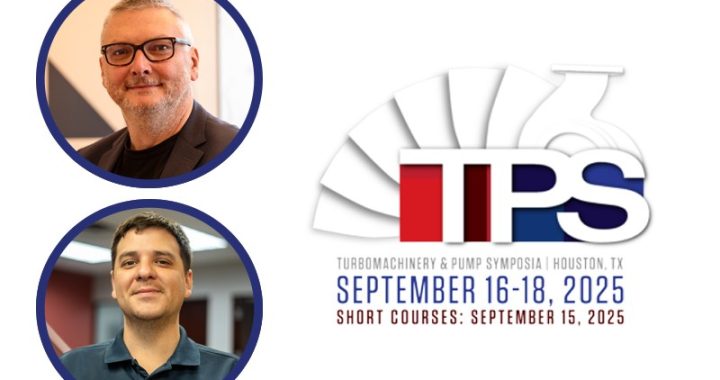
Hydro is proud to be presenting again at the 2025 Turbo Pump Symposia in Houston, TX! Join presenters Dr. Gary Dyson and Freddy Cardenas Linero as they discuss a case study where advanced engineering was used to dramatically increase flow of a shipping pump in an oil and gas terminal facility.
Wednesday, September 17, 2025 | 2:00 – 2:45pm | Room 370A
Centrifugal pumps are critical to fluid handling systems, but as operational demands evolve, optimizing performance becomes essential. This lecture will present a successful hydraulic re-rate of a propane shipping pump (P-1010) at Phoenix Park Gas Processors’ Hull facility in Texas, aiming to double railcar loading capacity without major system modifications. Instead of replacing the pump, a process requiring over 40 weeks of lead time and costly infrastructure changes, the project used a duplicate unit sourced from the aftermarket. It was reverse engineered, hydraulically redesigned, and optimized using CFD simulations to shift the Best Efficiency Point from 350 GPM to 800 GPM while reducing head by 60%.
The study highlights the importance of combining CFD analysis with mechanical evaluation to ensure reliable performance. It outlines a structured methodology from feasibility assessment to installation, including modeling, manufacturing, quality control, and commissioning. This project demonstrates how a targeted hydraulic re-rate can extend equipment life, increase throughput, and reduce energy use and capital costs, all while maintaining existing mechanical and system constraints.
Find out more about this year’s Turbo Pump Symposia here.
Learn more about Hydro’s Engineering Services.


 In-depth field testing paired with computational analysis provides a clear path to both an accurate diagnosis and a solution that has a high likelihood of success. The effectiveness of this methodology was proven for a Gulf Coast midstream company who was experiencing high vibration with their vertical freshwater pumps. By applying advanced field diagnostics, the end user was able to understand the underlying causes of the vibration and evaluate possible solutions in a theoretical environment prior to implementing them in the field.