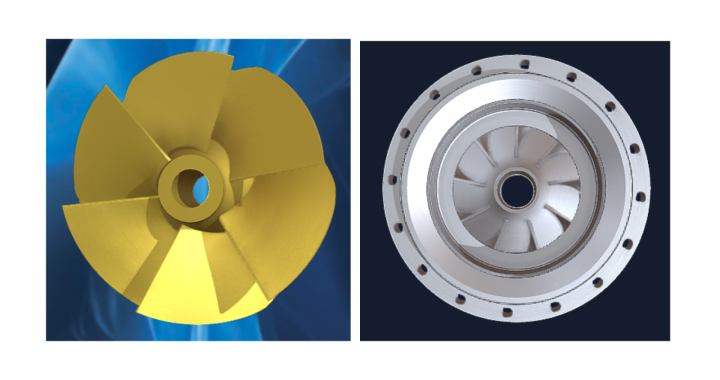
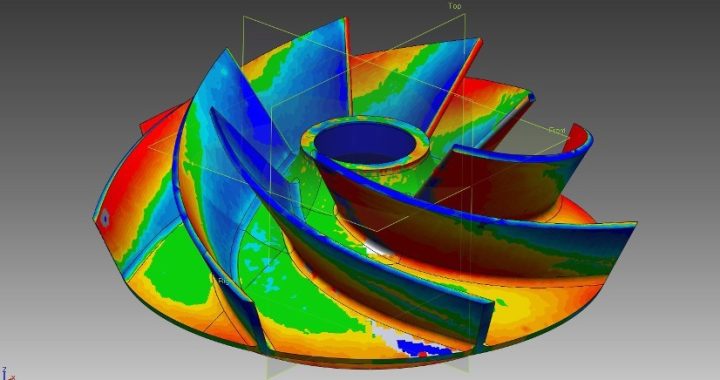
Casing Geometry

Fertilizer Focus: Expedited Sourcing for Replacement Casing

A Midwest US fertilizer plant had a boiler feed pump whose casing suffered from significant erosion damage at the packing gland location. The damage to the casing was severe enough that it was unusable. The delivery time and cost for a new pump both exceeded what the plant felt comfortable with, so they looked for alternative means to return the pump to reliable operation.

To provide a solution that reduced cost and lead time, Hydro’s Chicago service center explored various outlets for a used casing that could be refurbished for the service. Fortunately, a casing that matched the original boiler feed pump’s size and number of stages was found and procured.

Understanding the importance of casing geometry for hydraulic and mechanical performance, Hydro’s engineering team performed an extensive analysis of the two cases to verify geometric equivalency. After the engineering analysis concluded that the used case would meet the required hydraulic performance, it was refurbished and brought up to best-in-class tolerances.
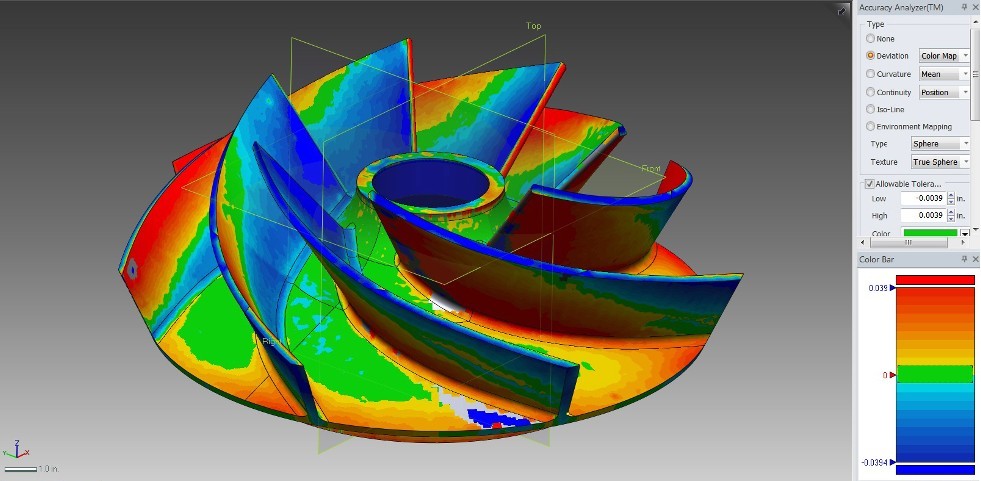
Boiler feed pump casing

As a final check to ensure that the refurbished case would operate smoothly and achieve the desired performance, the newly assembled pump was tested at Hydro’s performance test lab. The test lab generated a full performance curve that verified that the pump met the design operating flow and head. Mechanical performance was also assessed to ensure that vibration was acceptable throughout the operating range.

By reusing an old casing instead of purchasing a new pump, the site was able to reduce the cost of the repair. More importantly, the repair was completed in a much shorter timeframe than it would have taken to source a new pump. This greatly reduced the risk to plant production of not having a spare pump available on-site.
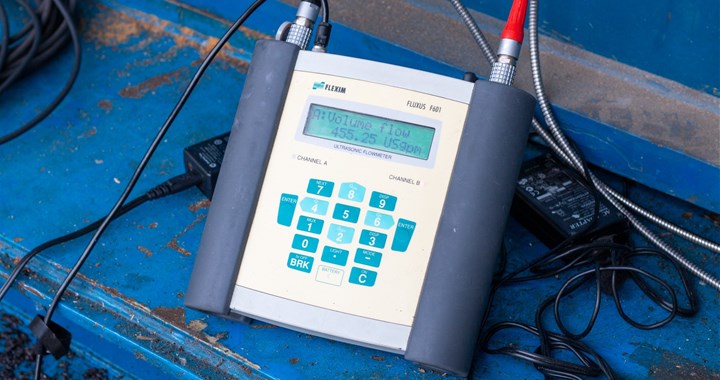
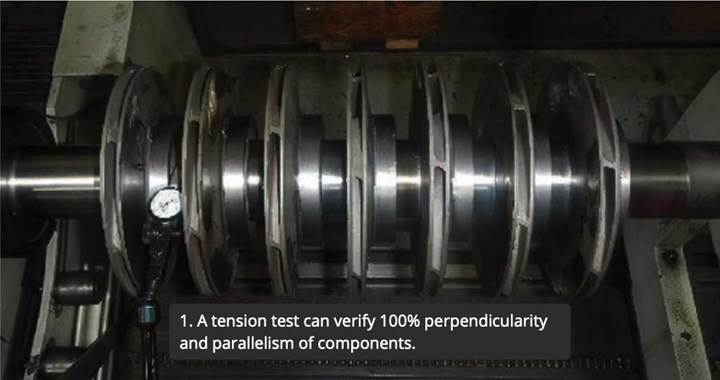
 

Tension Test

Quality Inspection Uncovers Impending Short-Term Failure

Often, a simple shortcut or misstep in a pump maintenance procedure or rebuild can lead to unforeseen and excessive life cycle costs, or ultimately catastrophic failure.

1. A tension test can verify 100% perpendicularity and parallelism of components.

When an end-user could not rotate its critical boiler feed pump shaft to align the pump to its driver, a combined cycle plant contacted an aftermarket pump service provider to examine a problematic third-party pump rebuild, as well as remove, inspect, and repair the failing equipment.

Prior to disassembling the recently rebuilt pump, the aftermarket pump service provider performed a visual inspection to see if there was any evidence of incorrect assembly procedures. The most apparent defect was observed on the outboard side of the pump. The shaft sleeve should have .250” minimum clearance between its face and the labyrinth seal, but the sleeve had been rammed into the lab seal making the pump shaft impossible to turn.

Before shipping any rebuilt pump, it’s essential to perform a quality assurance check to confirm the shaft turns freely. However, in this case, a few critical steps may have been overlooked during the pump’s previous maintenance work.

Read the full article in the May/June 2022 World Pumps Magazine.


Field Testing Assesses Risk of Reducing Minimum Unit Load

With changes in the energy landscape, many older plants need to adapt to more flexible operation to fluctuating needs of the grid and remain economically viable.  This flexibility often includes operation outside of the original design of the plant and its equipment.

A Midwest coal-fired power plant recently found themselves in this position. The plant had been designed for a minimum commercial load of 350MW, but they were considering reducing the load to 300MW. Plant engineering wanted to understand what risk operation at this low capacity posed to equipment reliability operation and life. The power producer contacted Hydro Reliability Services to develop an on-site test plan for their condensate, boiler feed booster, and boiler feed pumps to better understand how this operation would impact these critical pumps. Continue reading

Rediscover Hydro Parts Solutions

Did you know that Hydro can provide aftermarket parts solutions for critical pump parts and rotating equipment?

Hydro Parts Solutions, a subsidiary of Hydro, Inc., offers complex solutions to obsolescence as well as difficult-to-source replacement parts.

Utilizing state-of-the-art technology, such as laser scanning and 3D printing, Hydro Parts Solutions has established itself as a proven solution that possesses both the knowledge and sophisticated casting capabilities to expedite casting projects from months to weeks.

Types of items we can cast (and more):

  • Impellers
  • Diffusers
  • Discharge Heads
  • Casing Bowls
  • Suction Bells

Hydro Parts Solutions supports emergency component replacements at an optimal time frame while reducing risk, operational downtime, and unforeseen costs.

Engineered Quality Parts – On Demand, delivering:

  • Consistent Quality
  • 3D Sand Printing
  • Computer-aided machining
  • Emergency Repair
  • Industry Standards and Design Control Processes
  • Short Turnaround
  • Catalogue Data for Future Use
  • Transparency and Communication for our Customers

Want to take a detailed look into our proven parts process? Click on the link to view our redesigned webpage: https://hydroinc.com/parts-solutions/