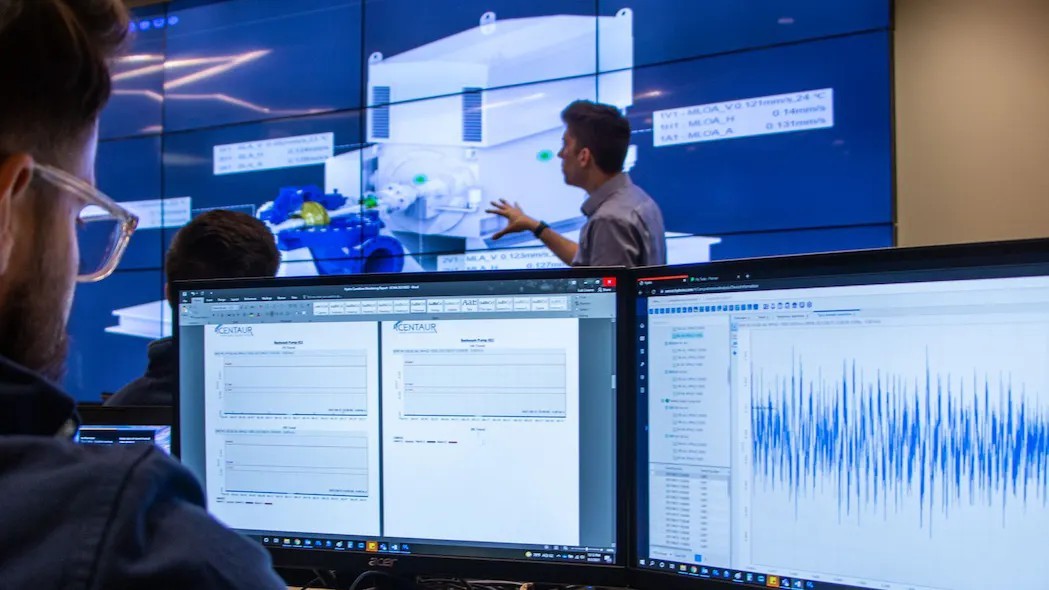
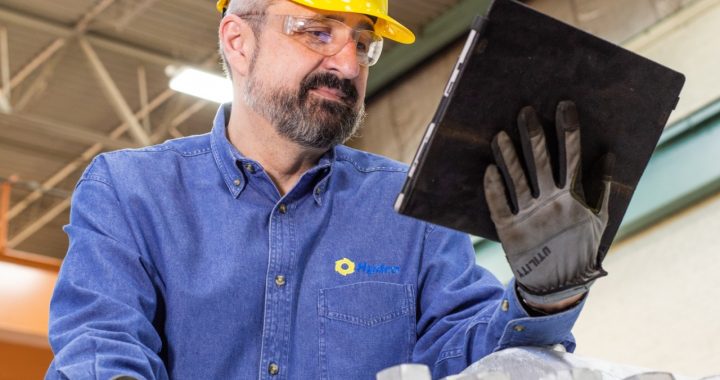
Maintenance technician reviewing equipment performance data on a tablet via a wireless sensor during an industrial inspection

Understanding What Vibration Signals Really Mean

One of the most persistent challenges in condition monitoring and vibration analysis is not finding signals. Modern wireless condition monitoring systems are excellent at that. The harder problem is understanding what those signals actually mean within the context of rotating equipment dynamics.

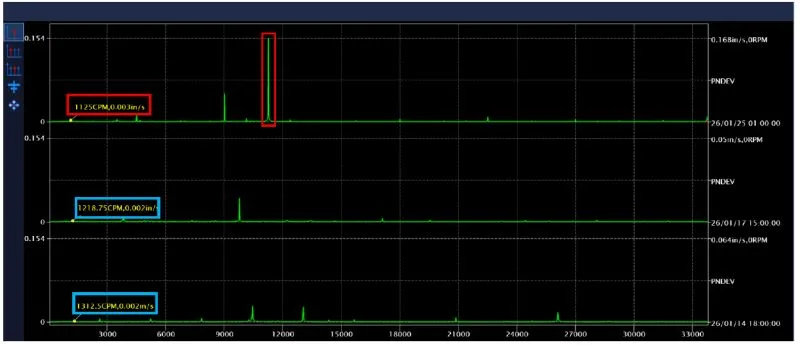
We recently evaluated a pump at a midstream facility where industrial vibration analysis showed vibration levels increasing sharply as operating speed approached roughly 1125 rpm. The frequency spectrum made the issue immediately visible. A dominant 10× running speed harmonic emerged, then largely disappeared as speed moved away from that range.

At first glance, the solution seems obvious. Avoid that speed.

In midstream operations, however, it is rarely that simple. Flow requirements, fluid properties, and system demand often dictate operating speeds. Blocking off ranges in a variable frequency drive (VFD) is not always practical, and in many cases, not possible at all.

That is where the real work begins.

The challenge was not detecting vibration. It was determining when a structural resonance was actually being excited, how strong the response was across speed and load, and what that meant for bearings, seals, and the overall machine train over time. Without that engineering context, the signal alone is easy to misinterpret.

When we analyzed the data across the full operating envelope, the picture became clearer. This was not a machine in distress. It was a predictable speed-dependent resonance that was only excited under very specific operating conditions.

That distinction matters, because it fundamentally changes the solution.

The answer is not simply “don’t run there.” The answer is engineering the system to shift the resonance, not forcing operations to work around it. That may involve stiffness changes, mass adjustments, or other design-level interventions that address the root cause rather than the symptom.

This is the gap between monitoring and reliability. Detecting issues is only the first step. Long-term reliability comes from engineering-led condition monitoring, where system behavior is understood and engineering judgment is applied to turn signals into meaningful decisions.

Seeing a signal is easy. Understanding it is harder. If you are wrestling with pump resonance, vibration behavior, or recurring condition monitoring alarms that never quite turn into answers, let’s talk.
Lunch & Learn: Understanding the Capabilities and Limitations of Condition Monitoring

Join Hydro as we chat with Vince Marino of Empowering Pumps about the capabilities and limitations of condition monitoring.

Condition monitoring isn’t just a buzzword; it’s a vital part of keeping your equipment running smoothly. Robert and Jim explain how understanding its capabilities and limitations can enhance overall efficiency. They discuss how condition monitoring fits into a broader maintenance strategy, ensuring a cohesive approach to equipment upkeep and reliability.

You can watch the full lunch and learn here.

To learn more about Hydro’s Centaur condition monitoring, visit our Centaur webpage or contact us with questions.

We understand that hands-on experience is important in making an investment in a new technology, and provide end users with “test drives” of our monitoring solution through a commitment-free 90-day free trial. Interested in trying it out yourself? Apply here.

Webchat: Drowning in Data? Learn to Swim in the Digital Age

On June 4, 2024, Hydro’s Centaur team joined Chemical Processing for a webchat to talk about navigating the challenges of adopting new digital technologies.

The digital transformation presents both opportunities and challenges. As continuous monitoring becomes more ubiquitous, we are collecting exponentially greater amounts of data than ever before. At the same time, our industries are losing experience and facing reductions in manpower.

It’s natural to think that digital technologies could fill that gap, but many are realizing that without a thoughtful implementation strategy more data doesn’t always translate into greater reliability. During this webchat, we explored how to successfully implement condition monitoring technology to harness the power of data and drive effective decision making.

Some of the main discussion points included:

  • What are the first steps for a successful digital implementation strategy?
  • Quality vs quantity: How do we ensure that the data collected is meaningful and useful?
  • What resources are needed to analyze and act on information?

You can watch the full webchat here.

Chemical Processing Webchat with Hydro from Hydro, Inc. on Vimeo.

To learn more about Hydro’s Centaur condition monitoring, visit our Centaur webpage or contact us with questions.

We understand that hands-on experience is important in making an investment in a new technology, and provide end users with “test drives” of our monitoring solution through a commitment-free 90-day free trial. Interested in trying it out yourself? Apply here.

Webchat with Chemical Processing: Drowning in Data? Learn to Swim in the Digital Age

The digital transformation presents both opportunities and challenges. As continuous monitoring becomes more ubiquitous, we are collecting exponentially greater amounts of data than ever before. At the same time, our industries are losing experience and facing reductions in manpower. It’s natural to think that digital technologies could fill that gap, but many are realizing that without a thoughtful implementation strategy more data doesn’t always translate into greater reliability. During this webchat, we’ll explore how to successfully implement condition monitoring technology to harness the power of data and drive effective decision making.

Register Now

Capability Spotlight: Centaur Condition Monitoring

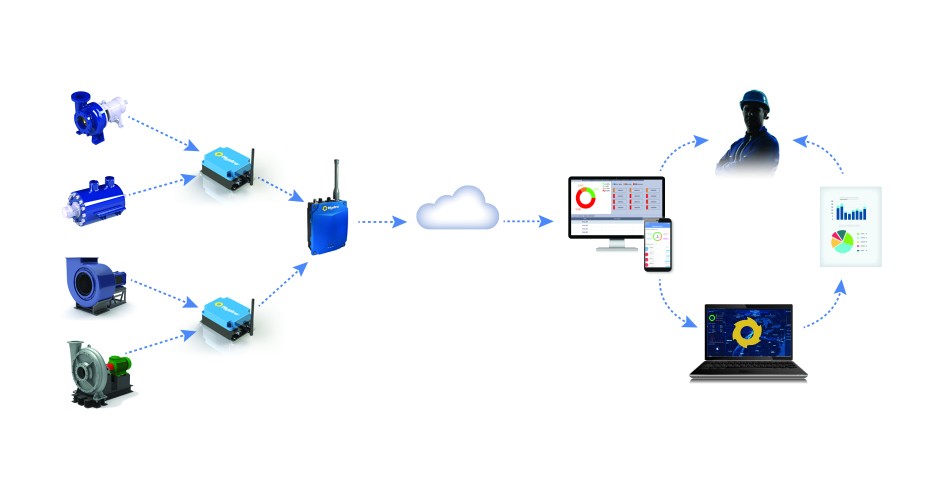
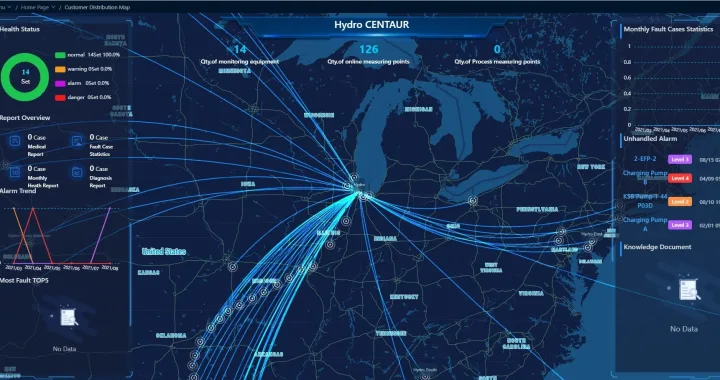
Hydro’s Centaur is an IoT condition monitoring solution developed by rotating equipment experts with a specific focus on detecting equipment failure modes and providing impending warning of incipient problems. Centaur includes the necessary hardware, software, and dedicated engineering support to successfully trend equipment condition and avoid unplanned downtime.

The Problem

Industrial users have relied on analog gauges and route-based data collection methods for decades. These methods often lead to inaccurate or incomplete readings and can expose workers to elevated safety risks, especially in hazardous environments. More importantly, traditional methods do not provide the benefits that continuous monitoring does, such as early detection and warning alerts, remote support for troubleshooting and diagnostics, and improved MTBR/MTBF.

Our Solution

A complete picture of equipment health can only be revealed by capturing a continuous stream of data and using both analytical power and subject matter expertise to turn this data into actionable information. Centaur achieves this by combining digital vibration, temperature, and pressure sensors, cloud-based software, and the experience gained through 50 years of developing aftermarket solutions for rotating equipment.

A critical piece of Centaur’s ability to reduce users’ cost of asset ownership and avoid unnecessary downtime is its dedicated engineering team, who provide proactive monitoring oversight, monthly health reports, and advanced analytical support. These rotating equipment experts perform root cause analyses of concerning trends and alarm events, which include recommended action steps to remediate suspected issues long before they become costly failures.

The Difference

In contrast to traditional IOT companies, Centaur was developed with the input of rotating equipment experts. As an unbiased presence in the aftermarket, Hydro has amassed experience over a broad spectrum of manufacturers, designs, and applications.

This expertise influenced hardware and software design, ensuring that Centaur is capable of effectively detecting and identifying known equipment failure modes. Some examples include the measurement of phase data and a frequency range capable of detecting bearing fault frequencies.

How it Works

The Benefits

  • Increased accuracy: Provides more precise pressure readings, maintaining safe and efficient operations.
  • Greater data collection frequency: Allows creation of detailed pressure profiles and trends, supporting identification of anomalies that indicate potential issues.
  • Increased worker safety: Eliminates need for workers to access dangerous or hard-to-reach areas and provides earlier warning of potential safety issues.
  • Predictive maintenance: Enables condition-based maintenance by tracking performance degradation over time.
  • Cost savings: Reduces cost of equipment ownership by preventing potential issues and reducing downtime.
  • Trending efficiency: Detecting and trending performance degradation facilitates more informed decisions on equipment operation and maintenance.

Ready to learn more about Centaur? Contact us or apply for a free trial.