Landmark contract signed between Oman’s PDO and Hydro Inc.

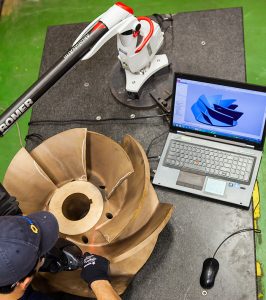
Hydro Middle East has a state-of-the-art manufacturing and service facility for comprehensive pump maintenance and rebuilding needs.

Hydro Middle East Inc. will provide aftermarket support for maintenance, rebuilds, retrofits, upgrades, re-rates, provide engineering support, conduct field service, and manufacture spare parts for PDO‘s entire centrifugal pump portfolio. Hydro Middle East has a state-of-the-art manufacturing and service facility for comprehensive pump maintenance and rebuilding needs.

Last year, Hydro Middle East and its agent Global Pavilion LLC were awarded a major 10 year contract by Petroleum Development Oman (PDO), the leading exploration and production company in Oman which is majority owned by the Government of Oman with Royal Dutch Shell, Total and Partex being the minority shareholders.

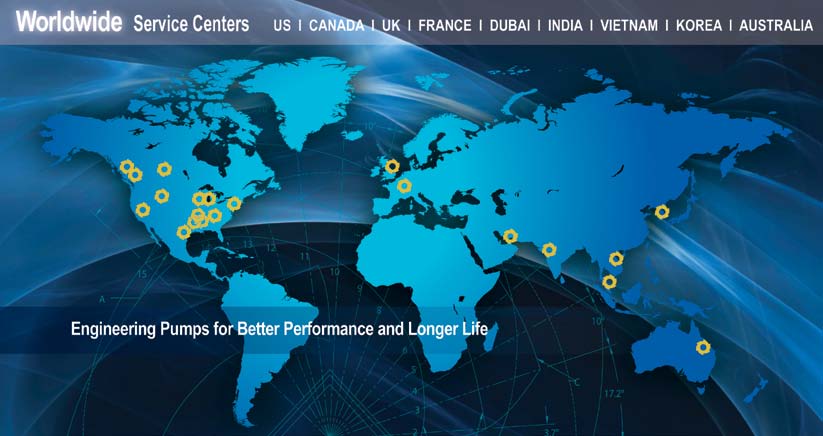
Hydro Middle East, the Dubai branch of Hydro Inc. group of companies having worldwide operations and headquartered in Chicago USA, has entered into a contract with PDO. With this contract, Hydro Middle East and its local partner Global Pavilion LLC will be responsible for a complete range of pump aftermarket services for both PDO’s high and low energy centrifugal pumps. In addition to the vital expertise that Hydro Middle East will provide to PDO, this contract also serves and supports the government’s initiatives to train young Omani engineers and utilize local resources within PDO local facilities.

Thomas Arakal, managing director of Hydro Middle East, noted that prior to Hydro’s arrival in the region, a need for high-level niche aftermarket engineering was not being served to industry here. “Hydro’s considerable engineering capabilities, along with ready and affordable access to our pool of experienced aftermarket engineers from our worldwide locations allow us to offer quick turnaround.”

George Harris, CEO of Hydro Inc. added, “With this new contract, Hydro looks forward to serving PDO’s needs while making an impact on young engineers in the region and helping to spread cutting-edge pump-engineering technology to this crucial region of the world.”

Hydro Middle East was established in Dubai’s National Industries Park with a state-of-the-art manufacturing and service facility for comprehensive pump maintenance and rebuilding needs. They are also licensed by American Petroleum Institute for drilling services (manufacture, service, testing, inspection of well control, pressure control and rig and drilling equipment, onshore and offshore).

Hydro has carved out a niche as the premier engineering and solutions based company for the oil and gas, power utility, nuclear, desalination, mining and petrochemical industries in the region.

Source: oilreviewmiddleeast.com

a group of people looking at a computer

Engineering is at the Heart of Hydro Inc.’s Aftermarket Services

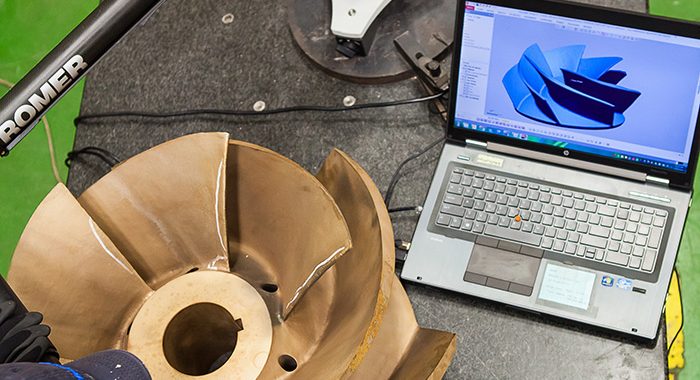
Hydro Inc. has a strong engineering capability and an expansive global reach in the pump industry, especially in aftermarket services. Pump Engineer had the pleasure of speaking with George Harris, Chief Executive Officer and Founder of Hydro Inc., where he discussed the company’s recent research initiatives, reliability support for customers, customized designs and the significance of upgrades and health audits.

Written by: Deirdre Morgan
Publisher: Pump Engineer / December 2016

“We were very fortunate that early in the company’s development we had the good fortune to work closely with Dr. Elemer Makay, a foremost consultant to the power generation industry and a specialist in troubleshooting multi-stage, high energy pumps”, states Harris. “Engineering combined with meticulous observation and analysis in the field were key to his troubleshooting process. As a result of his training over a twenty year period, engineering became the focus and strength of Hydro Inc.’s aftermarket services”.

According to Hydraulic Institute statistics, 85% of the critical pumps in industries, such as power, refineries and pipelines, are custom designed for the specific application intended. In order to properly rebuild, upgrade or troubleshoot these installations requires a solid aftermarket engineering capability and experience. Not only must the engineer understand pump fundamentals, but also the application and system in which the pump is being used, as well as the changes that may have occurred in plant operating conditions since the pump was originally installed.

Continue reading

HydroAire: A Partner in Sustainability

Hydro was recently featured in a short video produced by ArcelorMittal, the world’s leading integrated steel and mining company, about our combined efforts in saving energy and increasing pump efficiency.

“Water is critical to our operations. ArcelorMittal’s partnership with HydroAire, a Chicago company, helps us work toward one of the 10 sustainable development outcomes: to be a responsible energy user that helps create a lower carbon future.”


The Importance of Feed Pump Barrel Inspections

Written by: Greg James
Publisher: Pump Industry / November 2016

Rebuilding a typical boiler feed pump cartridge and returning the running clearances to specification is a critical process for effective and efficient plant operation. The cost to rebuild a cartridge – supply new mechanical seals, bearings and consumables, the lost production, down time and the labour costs – is a significant investment.

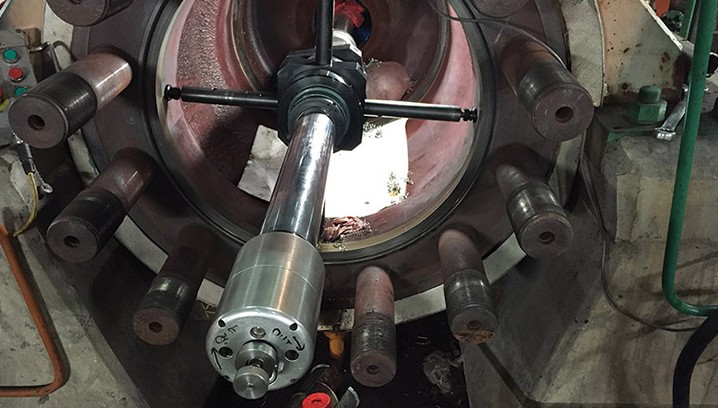
After rebuilding a cartridge and returning all operating clearances to specification, the good work can be greatly affected by installing the cartridge into a distorted barrel and/or discharge head combination.

Continue reading

Middle East Power Plant Demonstrates the Advantages of Pump Health Audits

With the help of a field evaluation, plant managers avoided unnecessary pump repairs.

Written by: Gary Dyson & Thomas Arakal
Publisher: Pumps & Systems / December 2016


A decade-old, 1,000-megawatt (MW) combined cycle power plant in the Middle East called an equipment repair and engineering company to conduct a pump health audit. Given the age of the plant and the fact that none of the pumps had undergone a major overhaul, plant personnel asked the engineering firm to determine which pumps should be pulled for repair at the next scheduled outage. The equipment consisted of six condensate extraction pumps and six boiler feed pumps.

Leaving the production process undisturbed, the field pump health evaluation team conducted a non-invasive pump study. Flow, pressure, vibration, power consumption, temperature and other data were collected for all the pumps in various regimes of operation. A team of engineers analyzed and compared the results of the measurements to the original design parameters. The study’s conclusions and engineering recommendations were published.

Continue reading